
Playgrounds are essential spaces for children to exercise, socialize, and stimulate physical and mental growth. However, improper equipment selection, unreasonable structural design, and substandard manufacturing quality often lead to accidental injuries. According to CDC data, more than 200,000 children aged 14 and under receive emergency medical treatment for playground-related injuries every year in the United States alone, with falls, pinches, and collisions accounting for the majority of accidents. To minimize safety risks, it is crucial to clarify the classification ofkids playground equipment and master scientific safety design standards and protection strategies.
1. Common Classification of Kids Playground Equipment
Kids playground equipment covers diversified indoor and outdoor products, which can be scientifically classified according to usage scenarios, structural materials and functional attributes. Different types of equipment have distinct safety risk points, laying the foundation for targeted safety protection.
1.1 Outdoor Kids Playground Equipment
Outdoor playground equipment is mainly used in parks, communities, kindergartens and scenic spots, featuring open space and large structural scale. It includes customized metal playground facilities, slide combinations, rope adventure equipment, themed outdoor amusement devices and kindergarten-specific play equipment. This type of equipment is exposed to wind, sun and rain for a long time, so anti-corrosion, anti-aging and structural stability are the core safety indicators.
1.2 Indoor Kids Playground Equipment
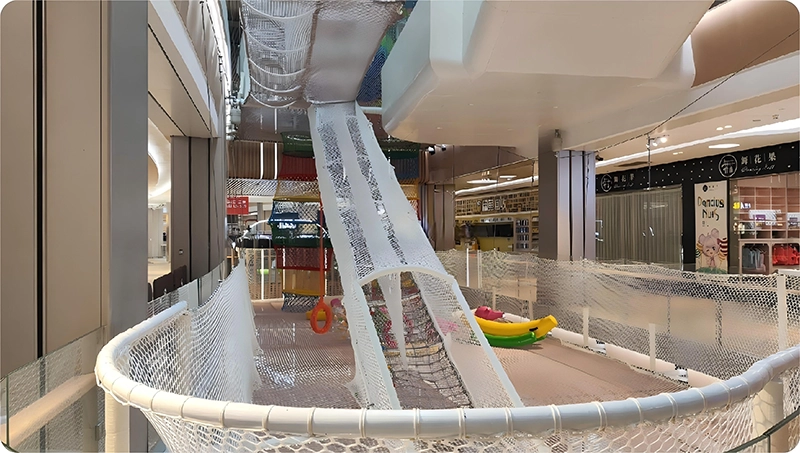
Indoor equipment is widely applied in shopping malls, family entertainment centers and indoor parks, including soft play equipment, trampoline parks, inflatable playgrounds and indoor water play facilities. Most indoor products adopt soft and flexible materials to reduce collision injuries, focusing on anti-slip, anti-collision and space layout safety.
1.3 Themed & Custom Playground Equipment
With the upgrading of the amusement industry, themed playground equipment has become mainstream. Such customized equipment is designed according to IP themes, site size and customer needs, with flexible shapes and diverse functions. It puts forward higher requirements for personalized safety design and customized structural optimization.
2. Core Safety Design Standards for Kids Playground Equipment
Scientific safety design is the fundamental way to protect children from equipment injuries. Global authoritative institutions have formulated unified industry standards to standardize the production and design of kids playground equipment. As stipulated in the ASTM F1487-25 standard, the core design goal of playground equipment is to reduce life-threatening and debilitating injuries for children aged 2 to 12 (ASTM International, 2025). Meanwhile, the U.S. Consumer Product Safety Commission (CPSC) has released a public playground safety handbook, clarifying detailed specifications for equipment structure, protective surfaces and space layout (CPSC, 2025).
2.1 Structural Safety Design: Eliminate Hidden Dangers From the Source
Unreasonable structural design is the main cause of playground accidents. Data shows that over 75% of playground injuries are caused by falls and structural jams. Qualified kids playground equipment must follow standardized structural design specifications: all edges and corners are polished into rounded arcs to prevent scratching; gaps between components are strictly controlled to avoid pinching children’s fingers and limbs; the height of elevated equipment is matched with age groups, and buffer zones are reserved around all facilities.
As a professional manufacturer focusing on customized playground equipment for 15 years, JOYKDM deeply implements international safety standards in all product designs. The brand owns 3 standardized factories covering 120,000 square meters and a professional R&D and design team of more than 600 people. All customized metal playgrounds, indoor soft play equipment and water park products adopt optimized structural design, eliminating sharp corners, narrow gaps and unstable structures from the source, and adapting to the physical characteristics of children of different ages.
2.2 Material Safety Design: Eco-Friendly, Durable and Anti-Aging
Playground equipment materials directly determine the safety and service life of facilities. Unqualified plastic, metal and inflatable materials may contain harmful substances or age and deform quickly, triggering safety accidents. Formal kids playground equipment must use environmentally friendly, non-toxic and high-strength materials: metal parts are treated with anti-rust and anti-corrosion spraying; soft play parts use food-grade safe materials; inflatable equipment adopts high-density wear-resistant PVC materials.
All products of JOYKDM strictly comply with CE and EN 1176 international safety standards. Every batch of materials is screened and tested, and each production link undergoes rigorous quality inspection. The materials are not only environmentally friendly and harmless to children’s health, but also have excellent anti-aging, wear-resistant and weather-resistant properties, ensuring stable operation of the equipment for a long time in indoor and outdoor environments and reducing safety risks caused by material aging.
2.3 Site & Buffer Safety Design
Reasonable site layout and buffer protection are key to reducing fall injuries. CPSC’s 2025 public playground safety handbook clearly points out that shock-absorbing protective surfaces under playground equipment can effectively reduce the risk of fatal head injuries from falls. Qualified playgrounds need to lay professional shock-absorbing floors, reserve sufficient activity space between equipment to avoid crowding and collision, and isolate high-risk equipment for older children from low-risk facilities for toddlers.
3. Daily Protection Strategies for Kids Playground Equipment
In addition to standardized design and production, daily maintenance and usage management are also important barriers to protect children’s safety. For operators and managers, regular equipment inspection, daily maintenance and scientific usage guidance can effectively avoid most accidental injuries.
First, conduct regular safety inspections to check for loose parts, material aging, structural deformation and damaged buffer surfaces, and repair and replace faulty equipment in a timely manner. Second, formulate usage rules, remind children to use equipment in accordance with age and functional specifications, and avoid dangerous behaviors such as crowding and jumping violently. Third, choose formal and qualified manufacturers when purchasing equipment, and avoid low-cost and uncertified products with hidden safety hazards.
As a one-stop playground equipment solution provider serving more than 100 countries worldwide, JOYKDM not only provides safe and standardized equipment, but also offers full-process services including site design, equipment installation guidance and after-sales maintenance. The professional team optimizes site layout and safety configuration according to customer project scenarios, helping global customers build safe, reliable and fun children’s play spaces.
4. Conclusion
The safety of kids playground equipment is a systematic project covering equipment classification, structural design, material selection, site layout and daily maintenance. With clear equipment classification and strict compliance with international safety standards such as ASTM F1487 and EN 1176, manufacturers can fundamentally eliminate potential safety hazards. Meanwhile, standardized operation and maintenance can further protect children’s play safety. Adhering to safety and quality as the core, JOYKDM always integrates professional safety design into every product and project, providing reliable one-stop playground solutions for global customers and creating safe and wonderful play experiences for children.